Oud. An Icon of Musical Tradition

The Arabic Oud, known as the "king of instruments" in Middle Eastern music, has a rich cultural heritage dating back to ancient Mesopotamia and Egypt.

Oud. An Icon of Musical Tradition

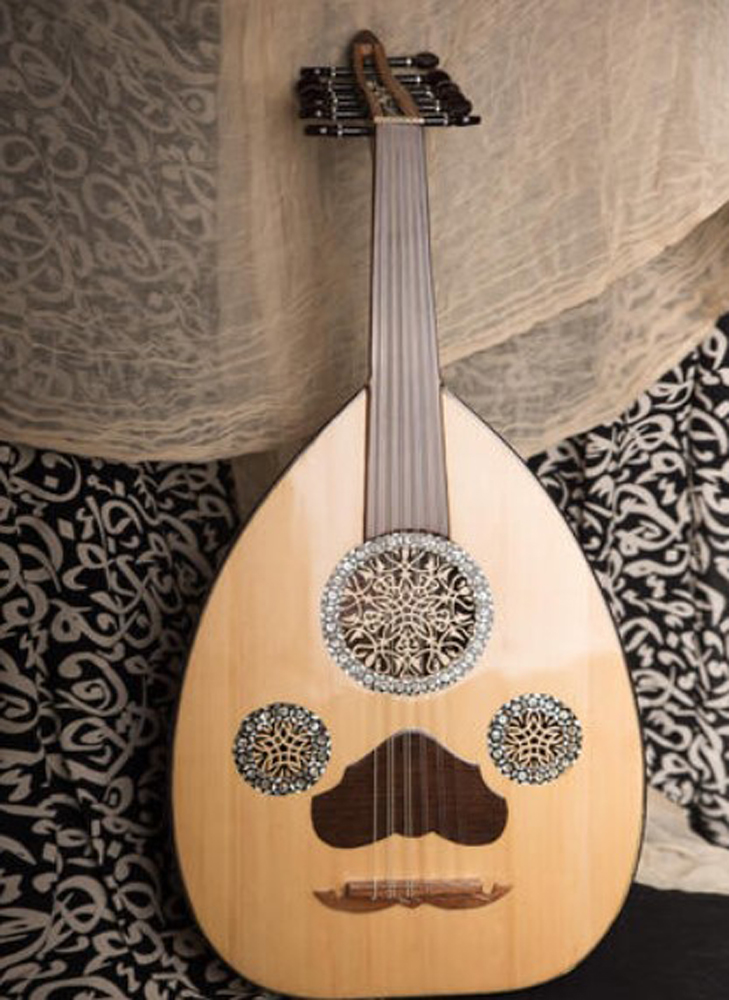
With its pear-shaped body, fretless neck, and melodious sound, the Oud has been a vital component of Arabic, Turkish, and Persian musical traditions

Oud. An Icon of Musical Tradition

Its name, al-oud, means "the wood" in Arabic, and it is considered one of the oldest musical instruments in Arab culture. Some believe it is the ancestor of the Pharaohnic Egyptian Nefer or the ancient Persian barbat, while others see it as the predecessor of the European lute.

Historical, Origins and Evolution

The oud originated in ancient Mesopotamia and evolved over millennia through influences from civilizations like the Babylonians, Assyrians, Persians, and Arabs. It features a pear-shaped body, short neck, and fretless fingerboard.

Historical, Origins and Evolution

Its journey continued through various civilizations, initially known as the "barbat" in ancient Persia and spread across the Arab world during the Islamic Golden Age.
By the 9th century, it had become prominent in Arab music, gaining further recognition during the Ottoman Empire and influencing Turkish classical music.

Historical, Origins and Evolution

During the Islamic Golden Age, significant advancements in construction and playing techniques occurred, thanks to Persian and Arab musicians. These advancements, incorporating mathematical principles and refining playing techniques, laid the foundation for the classical Arabic music tradition. Regional styles emerged over time, enriching the oud's repertoire.

Design and Construction

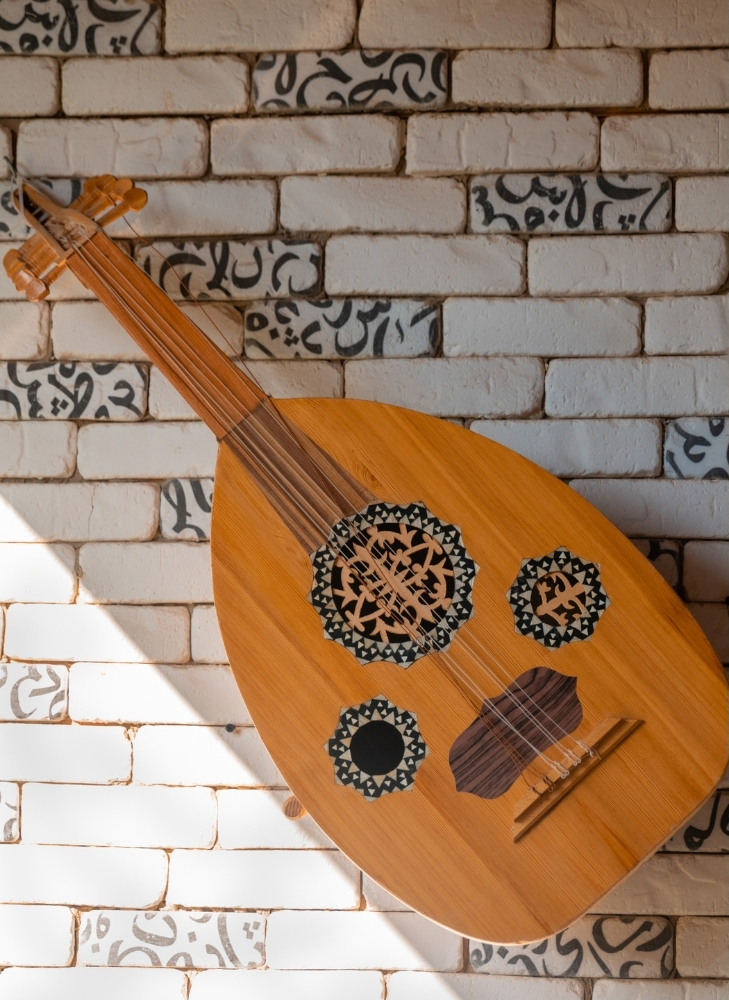
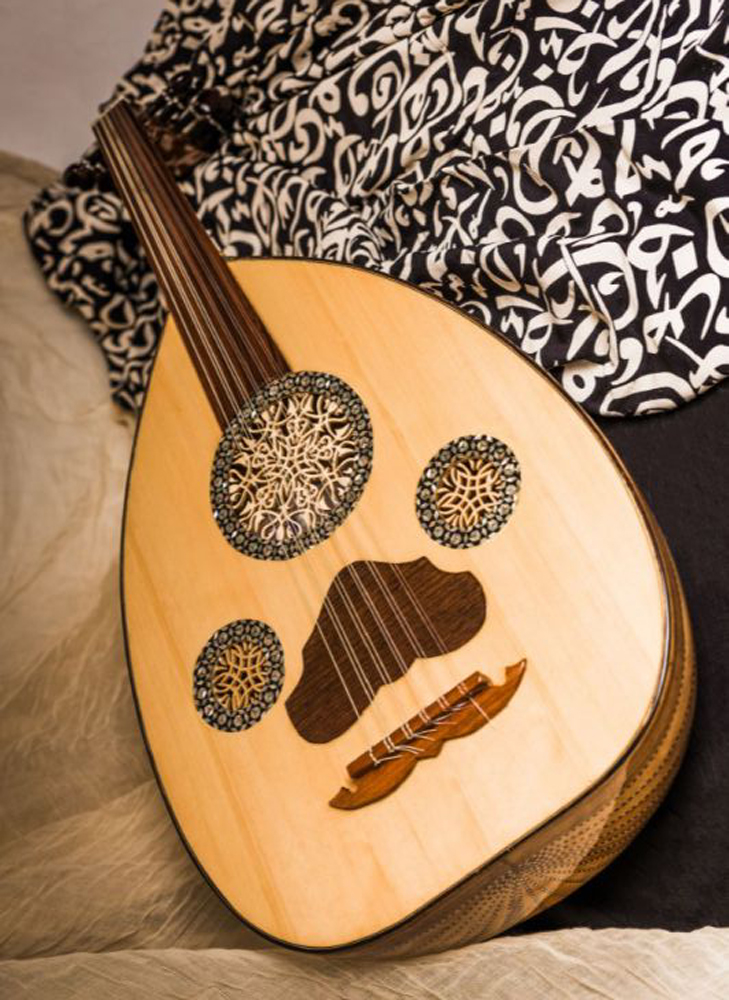
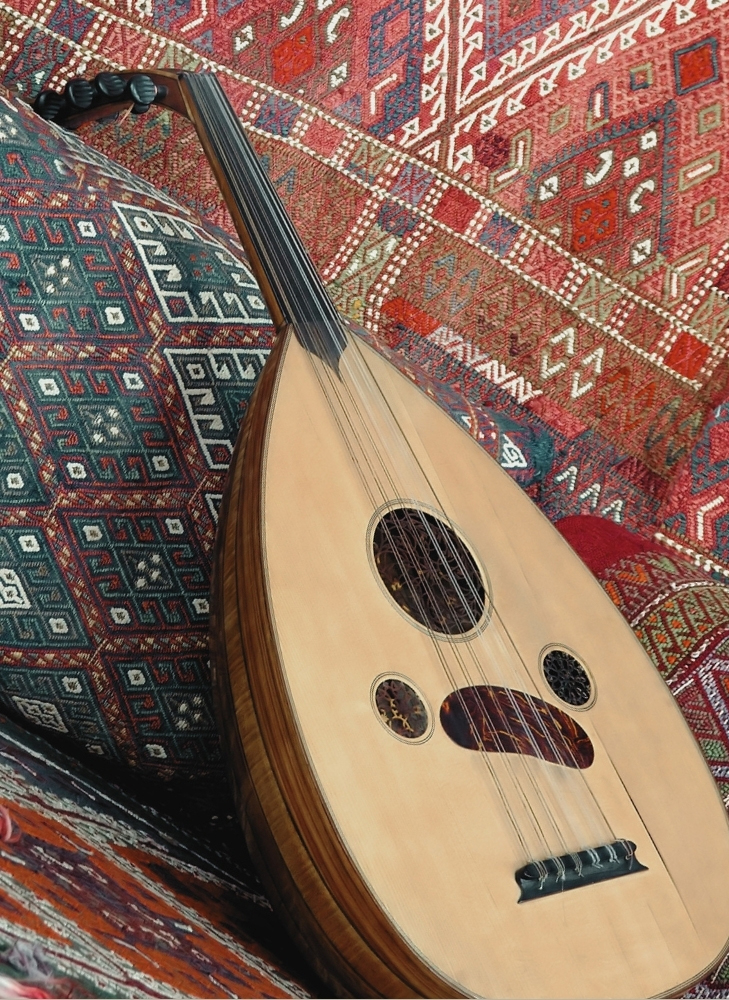
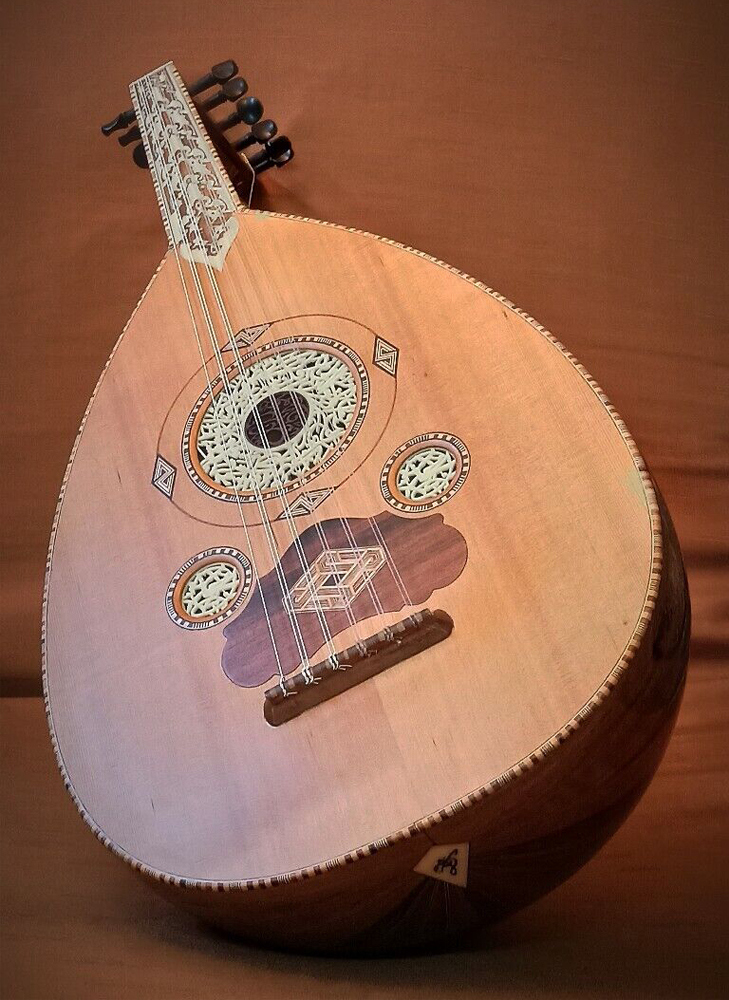
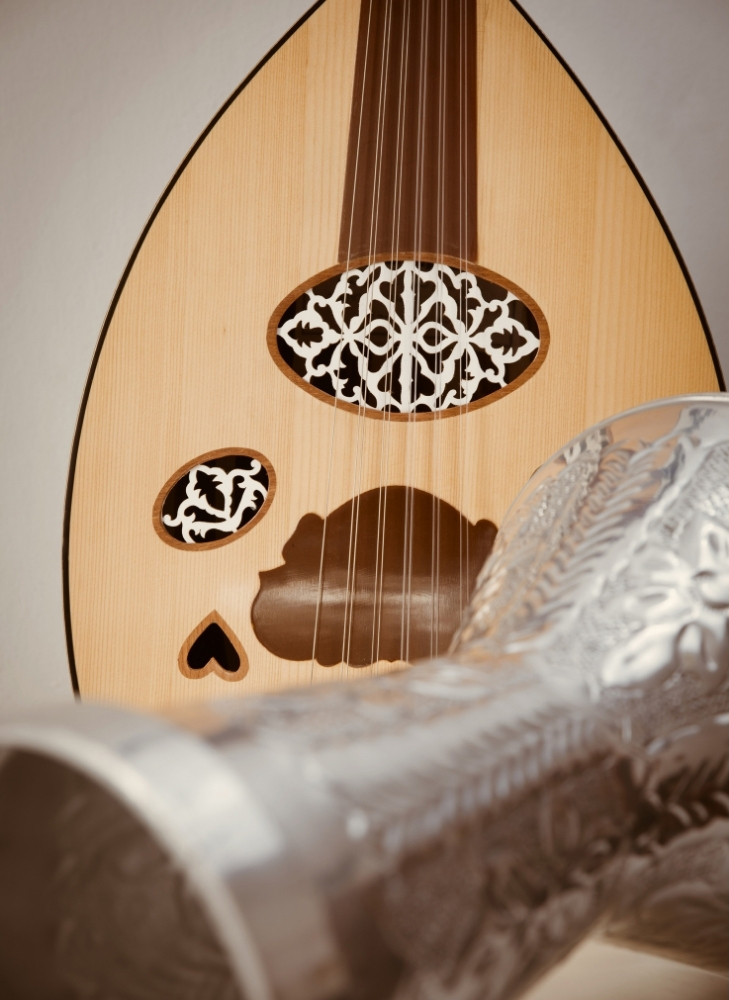
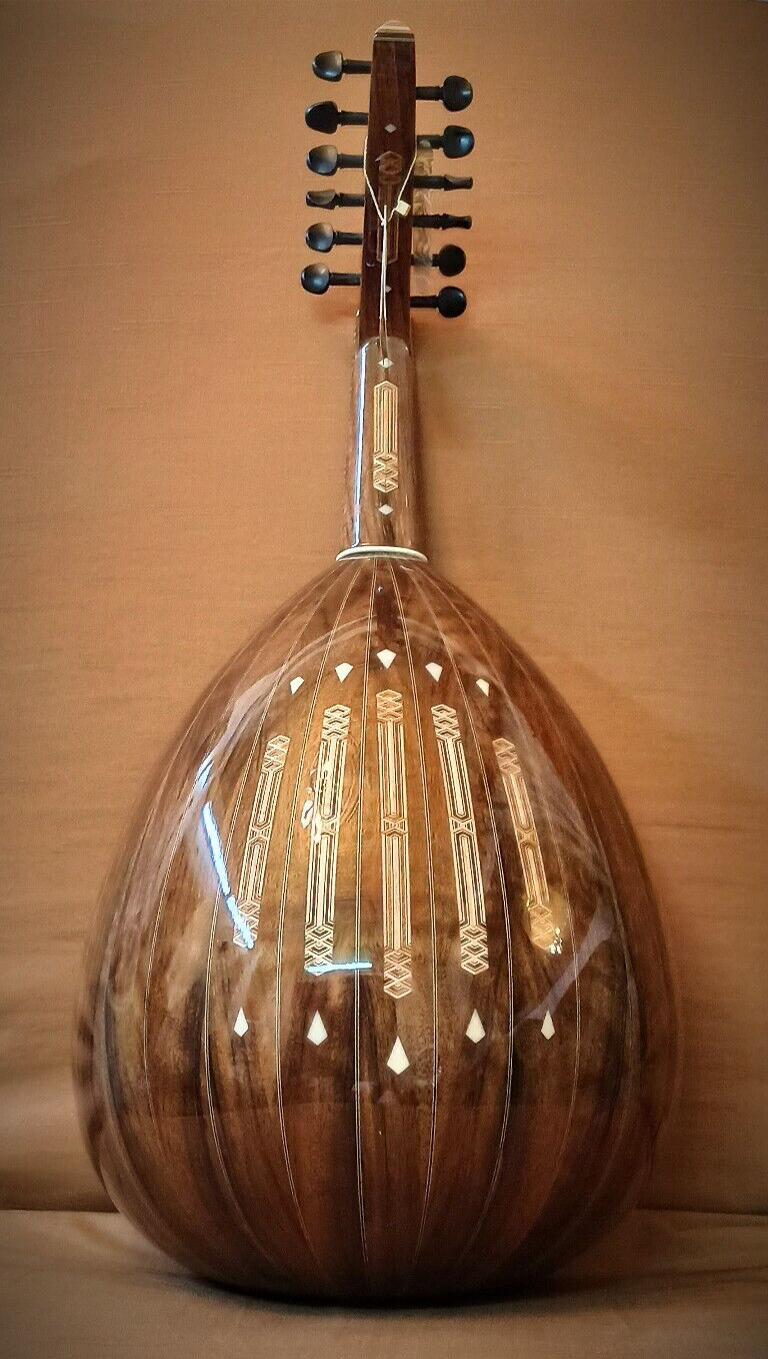
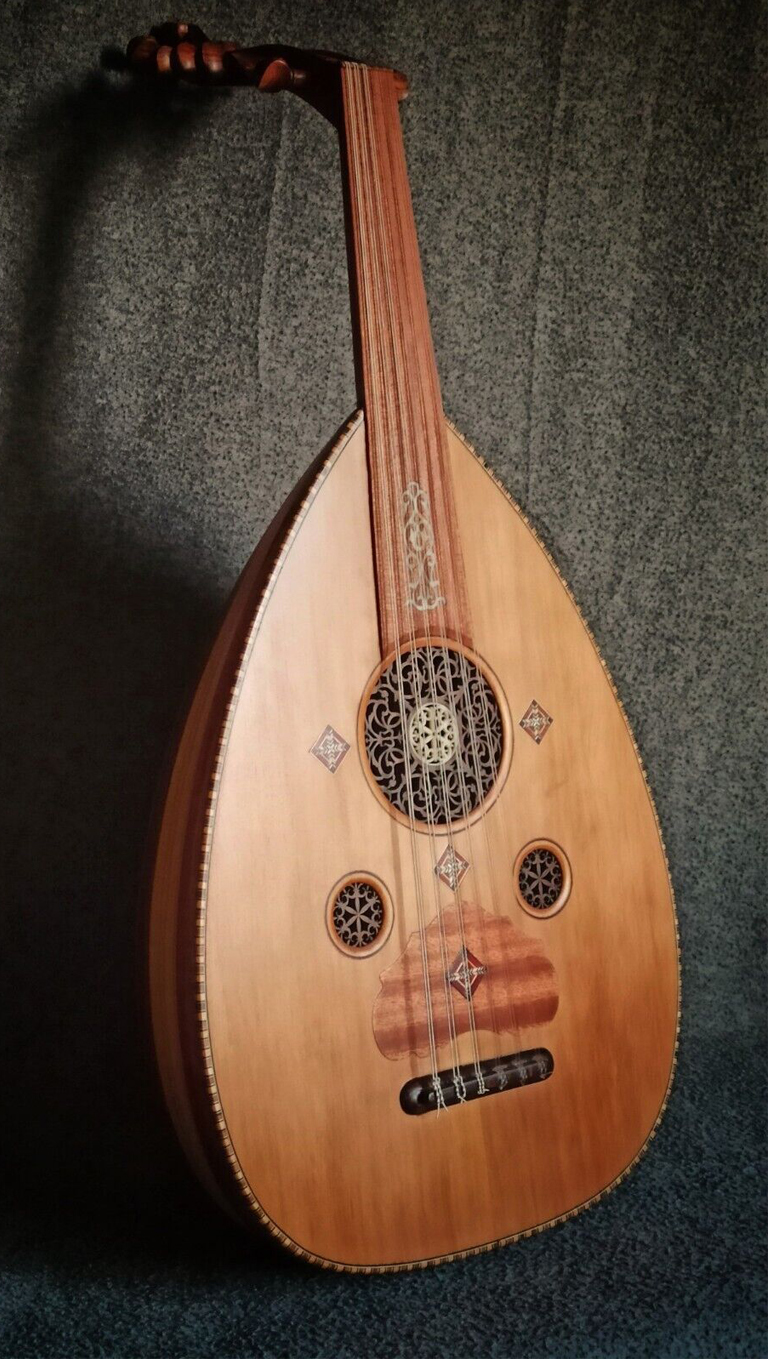
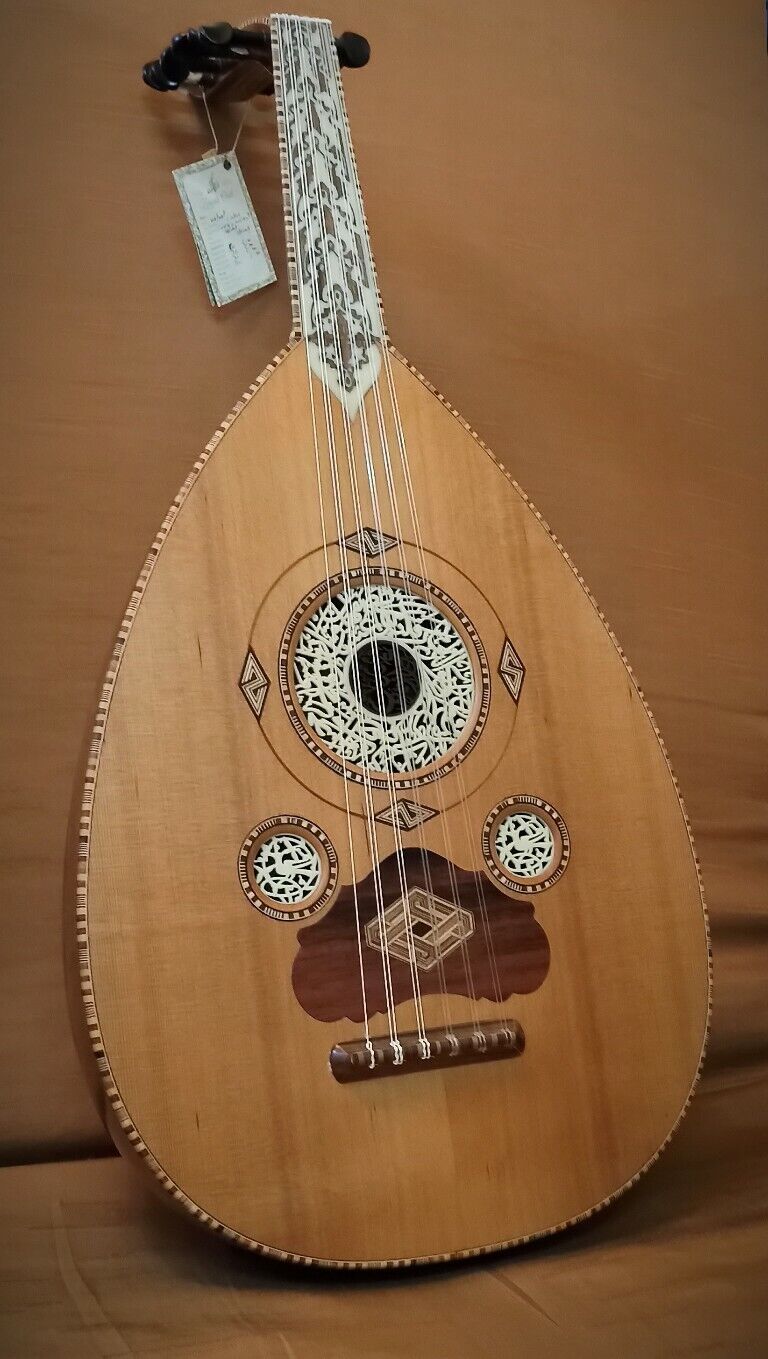
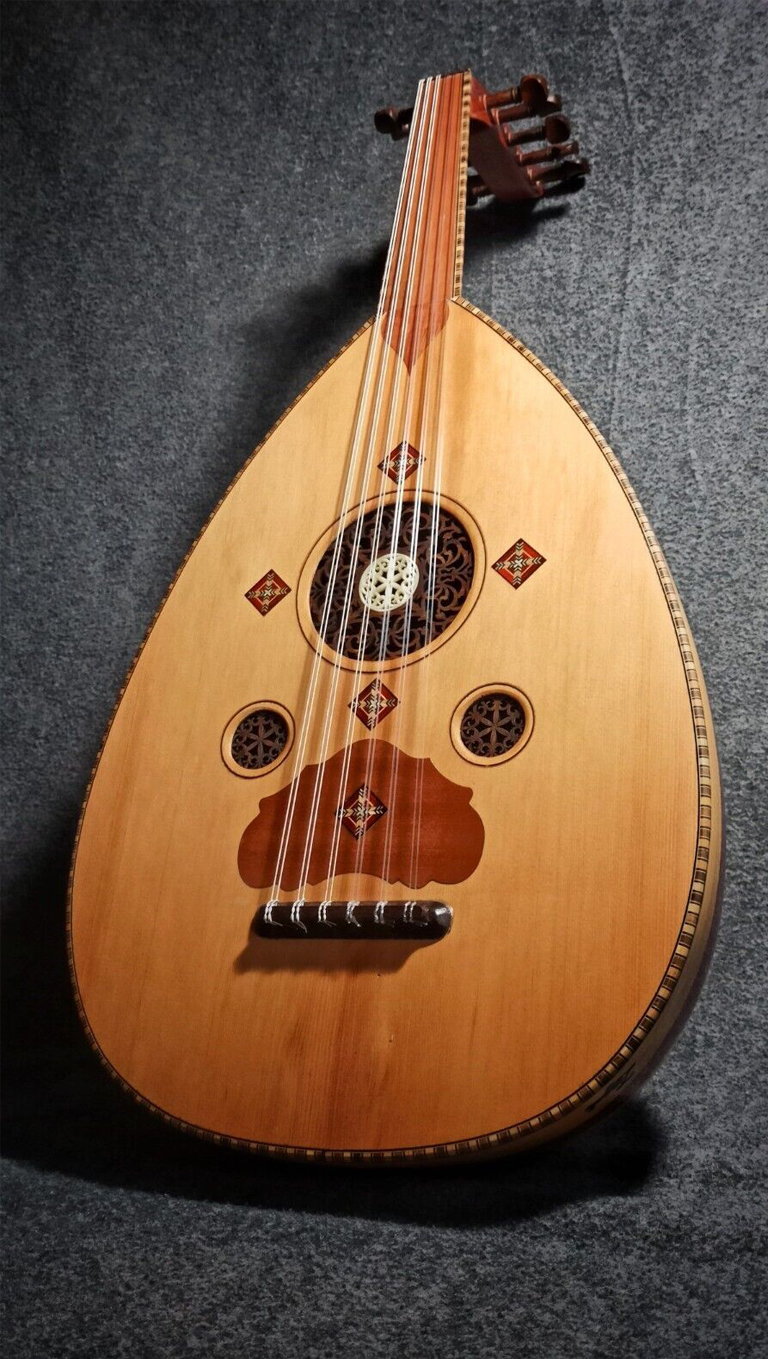
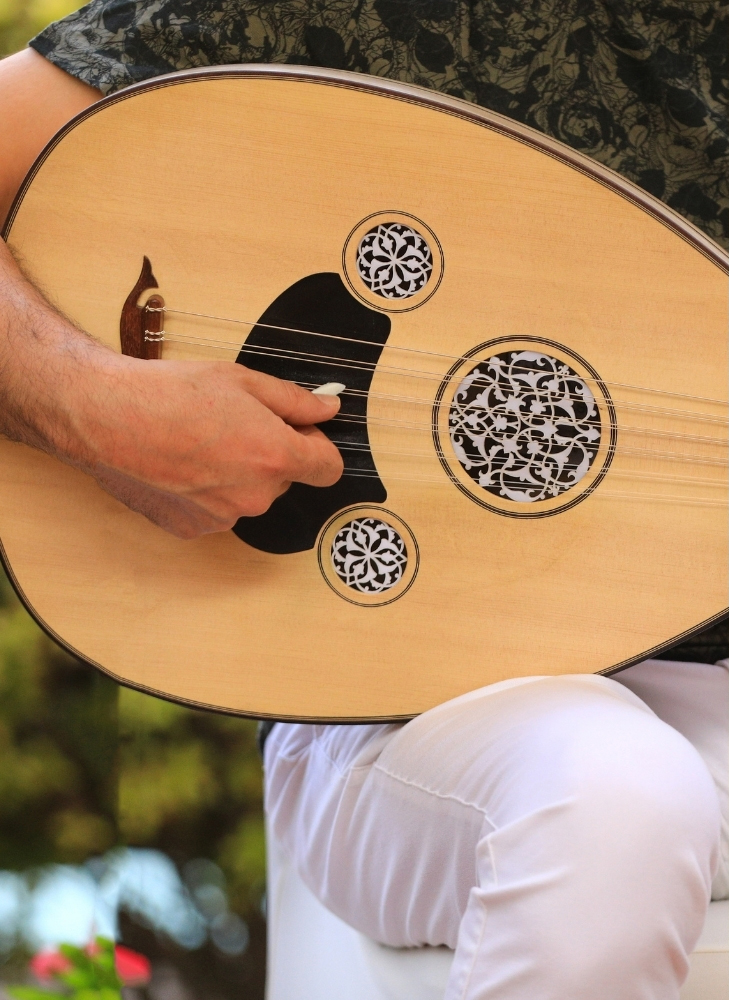
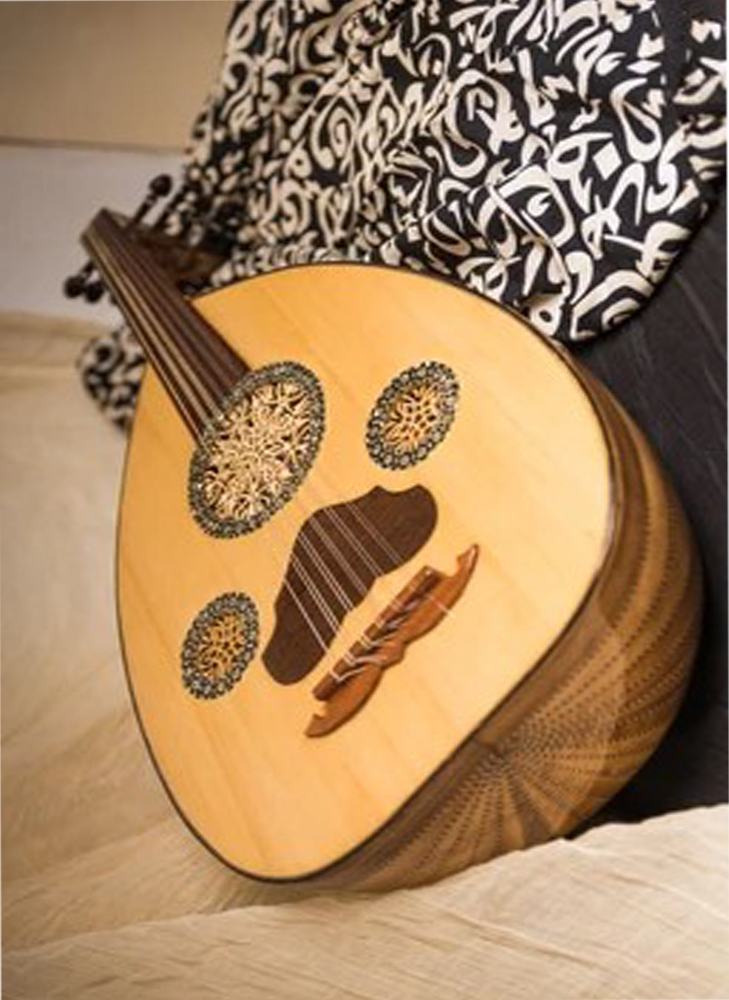
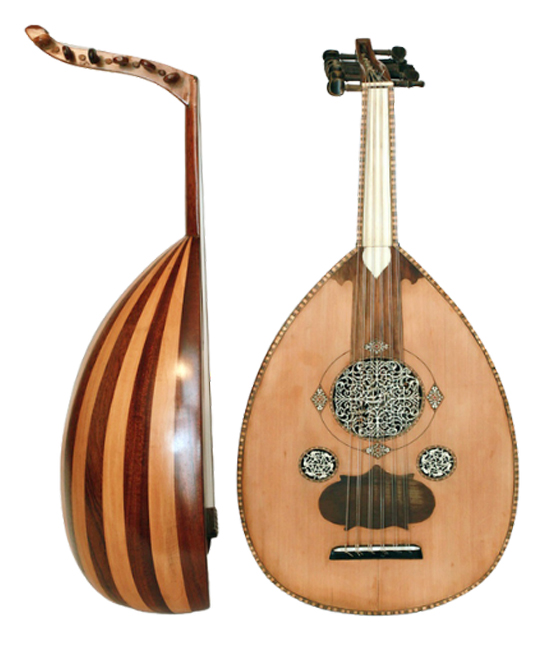
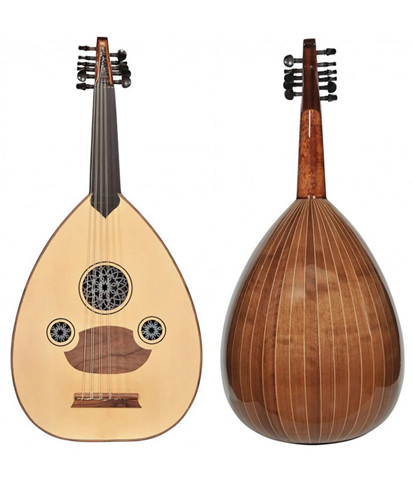
The Arabic Oud is a masterpiece that harmoniously combines simplicity with intricate craftsmanship, showcasing meticulous attention to detail. Crafted from carefully selected woods such as walnut, rosewood, or mahogany, its rounded back emanates warmth, while the intricately carved cedar or spruce soundboard, embellished with delicate rosettes, exemplifies the artisan's expertise.

Design and Construction

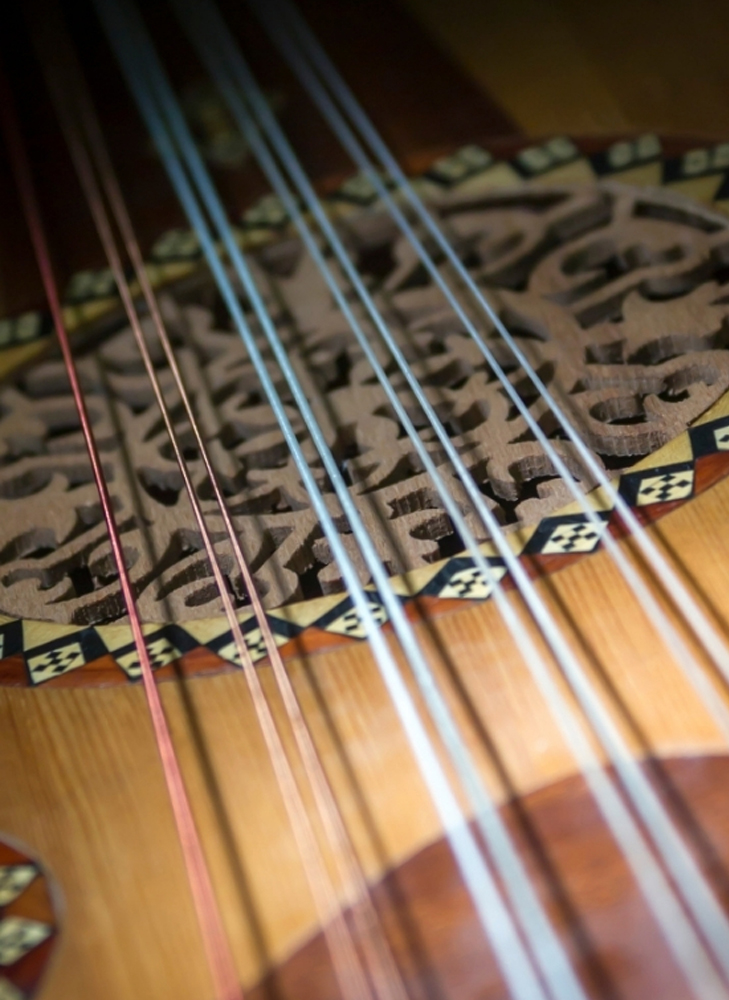
The fretless neck allows for microtonal nuances essential in Arabic music, accompanied by nylon or gut strings stretched over wooden pegs or tuning machines. Painstakingly created by skilled artisans, the Oud's fretless fingerboard enables nuanced expression, while its distinctive rosettes enhance both its visual appeal and acoustic performance, resulting in a deeply enriching musical experience.

Design and Construction

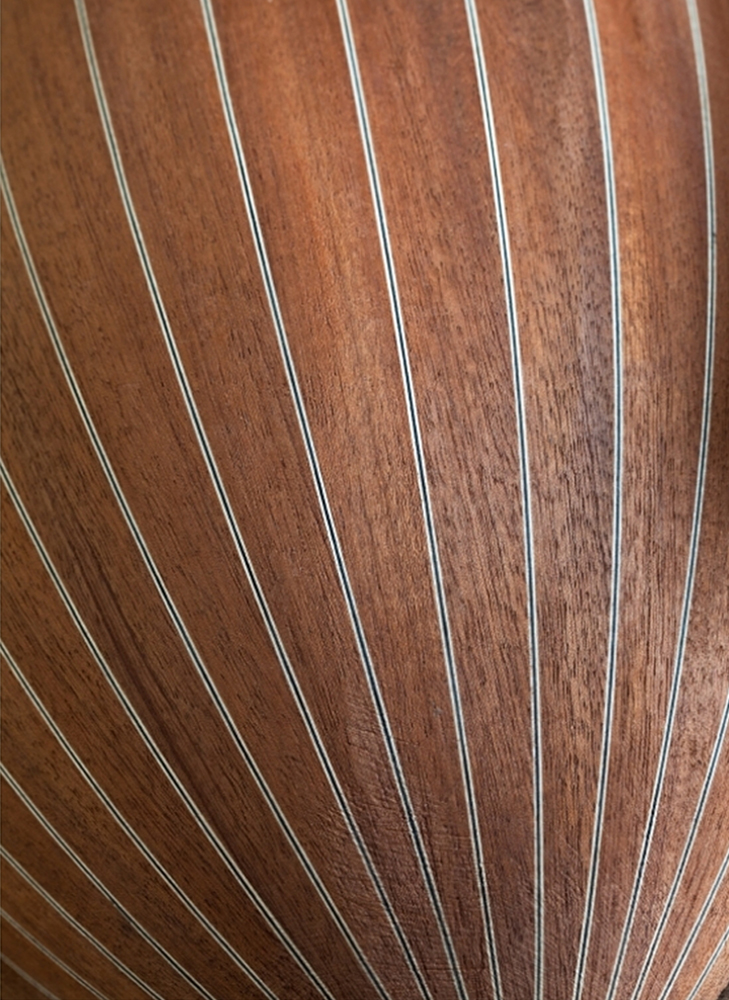
The sound of the Oud resonates from within its hollow body, composed of a rounded back enclosed with a flat soundboard, while the back consists of 15-25 strips of wood. Typically, the open side of the back is adorned with a rosette.

Design and Construction

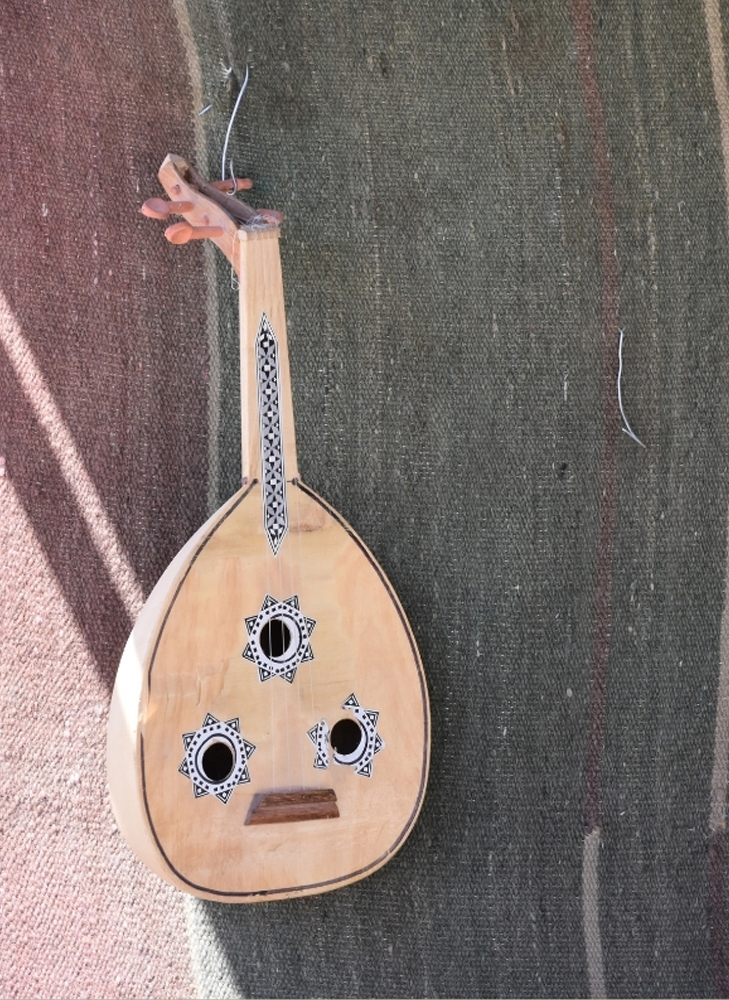
The Oud boasts two distinctive features: its pear-shaped body and fretless neck. Additionally, the body of the instrument contains 1-3 sound holes, often decorated with purfling, without compromising its sound quality. Resembling a large gourd, the Oud's body comprises a complex assembly of thin wood staves, while the upper portion is crafted from lightweight wood.

Playing Techniques

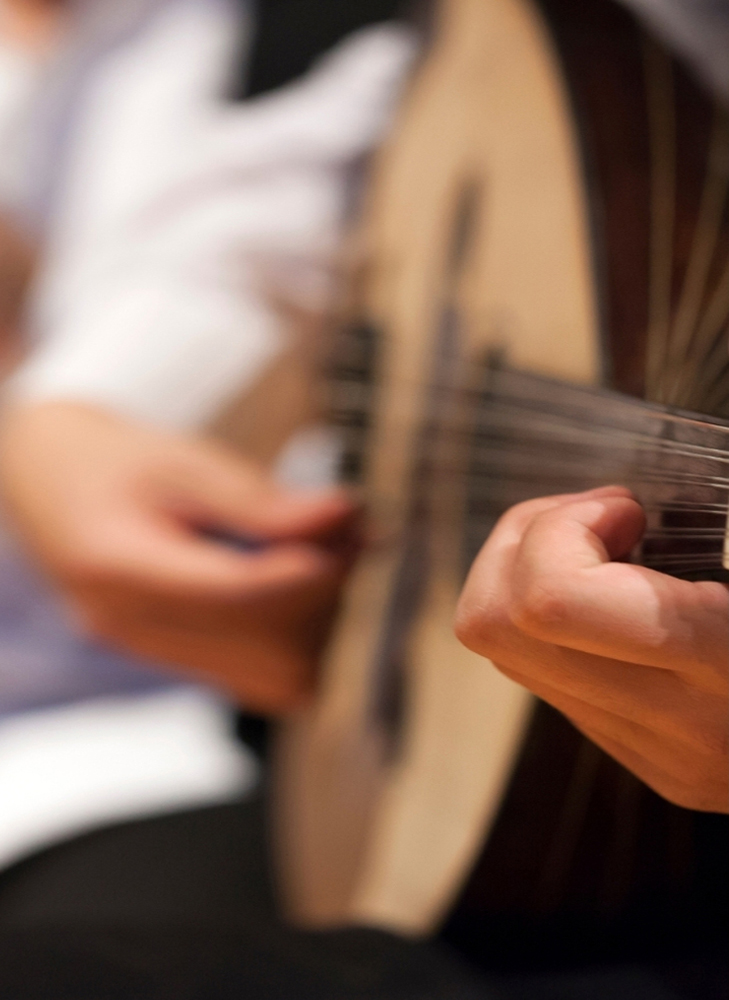
Mastering the oud requires years of dedication and practice, as it demands a delicate balance of technique, intuition, and musicality. Unlike fretted instruments, such as the guitar, the oud's fretless design necessitates precise finger placement to produce accurate pitches. Musicians employ a combination of plucking and strumming techniques, using a plectrum, or "risha," made of various materials such as plastic, tortoiseshell, or horn.

Playing Techniques

The oud's tuning system, typically consisting of five pairs of strings with a single bass string, allows for versatility in playing various maqamat (melodic modes) and rhythms. Advanced players often explore intricate ornamentations, such as trills, slides, and vibrato, to embellish melodies and express their artistic creativity.


Types of Oud

Arabic ouds

Arabic ouds are found commonly throughout North Africa, and Lebanon and Jordan, Iraq and Iran, as well as throughout the Arabian Peninsula. There’s a very romantic sound produced by these instruments, with deep, round, and well-balanced sound qualities that are different and distinct from the ones produced by Turkish ouds.

Turkish ouds

Turkish ouds, on the other hand, are typically found in Turkey as well as in Greece. They have a brighter sound, a more energetic sound, and a sound that is usually tuned to an entire step higher than Arabic ouds with a lot more tension in the strings that produce sounds and higher frequencies.

Oud Story

Pre-Islamic Era

Ancient Roots

Origins: The oud's history can be traced back to ancient Mesopotamia (modern-day Iraq) and Egypt, dating as far back as 3000 BCE.
Development: It evolved from similar instruments like the Assyrian "kithara" and the Persian "barbat," gradually gaining popularity across the Middle East.

8th to 14th Century

Islamic Golden Age

  • Flourishing Period: During the Islamic Golden Age, which spanned from the 8th to the 14th century, the oud experienced significant advancements in its design, construction, and playing techniques.
  • Cultural Significance: The oud became deeply embedded in Islamic culture, playing a central role in musical traditions across the Arab world, Persia, and beyond.
We met at the wedding of our close friends and immediately found a common language, so a year later our first date happened.

14th to 17th Century

Medieval to Renaissance Era

Spread in Europe: As Islamic culture and trade routes expanded, the oud influenced European music, leading to the development of similar instruments like the lute. Divergence: While the oud continued to be popular in the Middle East and North Africa, European variations of the instrument diverged, leading to the emergence of distinct musical traditions.

18th Century to Present)

Modern Revival and Globalization

Revival: The oud experienced a revival in the late 19th and early 20th centuries, with renewed interest in traditional Middle Eastern music and culture. Global Influence: In the 20th and 21st centuries, the oud's influence spread globally, impacting diverse musical genres and cultures beyond its traditional roots. Innovation: Modern innovations in oud construction and playing techniques continue to evolve, reflecting both tradition and contemporary influences.


Design of ouds

The sound of the Oud vibrates within its hollow body. It is made of a rounded back, which is enclosed with a soundboard, a flat sheet of wood, whereas, the backside of it is made of 15-25 strips of wood. Usually, the open side of the back portion is known as the rosette. There are mainly 2 distinctive features of this musical instrument- one is its pear-shaped body and the second is its fretless neck. On the other hand, the body of this instrument has 1-3 sound holes, which usually remains decorated with purfling. But this decoration never creates a bad impact on its sound quality. Oud’s body usually looks like a big gourd and it is made of a complex system of thin wood staves. The upper part of this instrument on other hand is made of lightwood.


Playing Techniques

The sound of the Oud vibrates within its hollow body. It is made of a rounded back, which is enclosed with a soundboard, a flat sheet of wood, whereas, the backside of it is made of 15-25 strips of wood. Usually, the open side of the back portion is known as the rosette. There are mainly 2 distinctive features of this musical instrument- one is its pear-shaped body and the second is its fretless neck. On the other hand, the body of this instrument has 1-3 sound holes, which usually remains decorated with purfling. But this decoration never creates a bad impact on its sound quality. Oud’s body usually looks like a big gourd and it is made of a complex system of thin wood staves. The upper part of this instrument on other hand is made of lightwood.

Contact with us